Best Water Softeners (2026)
Softener sizing is arithmetic, not opinion — your hardness, your household size, your water use. Get that right and several systems will serve you well; get it wrong and the best unit on the market will regenerate too often and cost you salt forever. This guide covers the sizing first, then the systems.
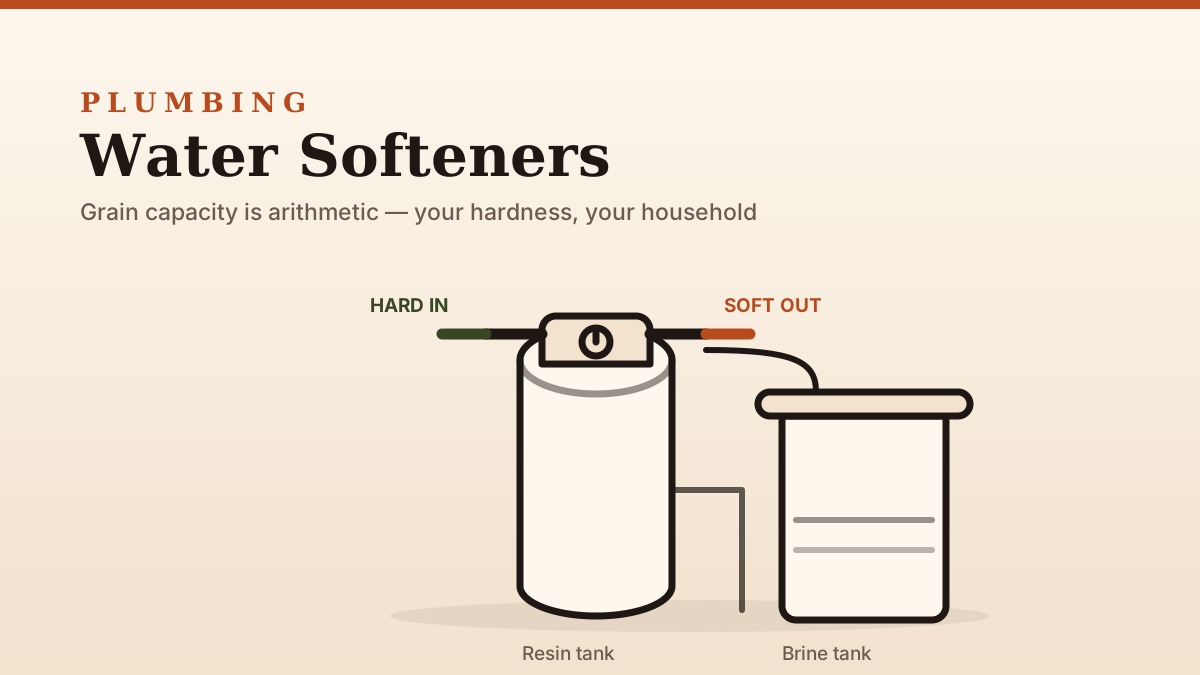
SpringWell SS1
- Around 97% hardness reduction
- High-flow tank design rated to about 20 GPM
- Demand-initiated regeneration — regenerates on water used, not on a timer
- Lifetime warranty
The ranked top 3
SpringWell SS1
Best for households that want it sized and forgotten
High flow, demand-initiated regeneration and a lifetime warranty — the system to buy if you would rather not think about it again.
Fleck 5600SXT digital control
Best for people comfortable specifying their own system
The control valve much of the industry is built on, at a price that undercuts most packaged systems.
Whirlpool WHES40E
Best when you want it this weekend
A 40,000-grain system off the shelf at big-box retail — the pragmatic answer for a mid-sized household.
Compared
| Pick | Best for | Capacities | Regeneration | Warranty |
|---|---|---|---|---|
| SpringWell SS1 | Best for households that want it sized and forgotten | 32k / 48k / 80k grain | Demand-initiated | Lifetime |
| Fleck 5600SXT digital control | Best for people comfortable specifying their own system | 24,000–64,000 grain | Demand-initiated (metered) | See supplier — varies by assembler |
| Whirlpool WHES40E | Best when you want it this weekend | 40,000 grain | Demand-initiated | See manufacturer |
How we reviewed this
Size it before you shop
Grain capacity is not a quality rating, it is a match to your water. The rough calculation:
people in the house × 75 gallons per day × your hardness in grains per gallon × 8 days = the capacity you want between regenerations.
Get your hardness from a test kit or your utility's water quality report. As a sanity check on the result: smaller homes and couples are often served by 32,000 grain, typical families by 40,000–48,000, larger households by 50,000–60,000, and big families or properties by 80,000 and up. If a salesperson quotes a capacity without asking your hardness, they are guessing.
Demand-initiated regeneration is the feature that matters
A timer-based softener regenerates on a schedule whether or not you used the water — wasting salt and water every cycle, and leaving you hard water early if you use more than expected. A metered, demand-initiated unit regenerates on actual use. Every system above is demand-initiated, and we would not recommend one that is not.
What this guide is based on
Published specifications, capacity ranges, warranty terms and pricing reported across the trade, plus general experience of what fails on this equipment. We have not run water quality tests on these specific systems and publish no numeric score, because a score implies a measurement we did not take. Prices are indicative and move — check the current figure.
Links
Manufacturer reference links, not affiliate links — we are not currently in these programmes. If that changes the link will be labelled and the disclosure at the top still applies.
Why Trust Our Recommendations
FAQ
What size water softener do I need?
Multiply the people in your house by 75 gallons per day, multiply by your hardness in grains per gallon, then by about 8 days between regenerations. That gives the grain capacity to look for. A family of four on 10 gpg water works out near 24,000 grains of demand, and a 32,000–40,000 grain unit gives sensible headroom.
Do I need a softener or a filter?
They solve different problems. A softener removes the calcium and magnesium that cause scale, limescale on fixtures and poor lathering. A filter removes sediment, chlorine taste, iron or contaminants. Hard water plus bad taste means you likely need both — some systems combine them, such as units that pair a carbon pre-filter with the softener.
Is salt-free 'softening' the same thing?
No. Salt-free conditioners change how scale forms rather than removing hardness minerals, so your water is still hard by measurement. They can reduce scale build-up and need no salt, but if your goal is genuinely soft water — lather, spot-free glassware, no scale in the heater — an ion-exchange softener is what does it.
Have you tested these yourself?
No, and we will not imply we have. This is a comparison of specifications, capacities, regeneration behaviour and warranty terms, informed by trade experience with this class of equipment.
About the reviewer
Nelo Tested Trade-informed — see who publishes Nelo Tested and how we review.